
Industrial equipment
Hydraulic Scissor Lift
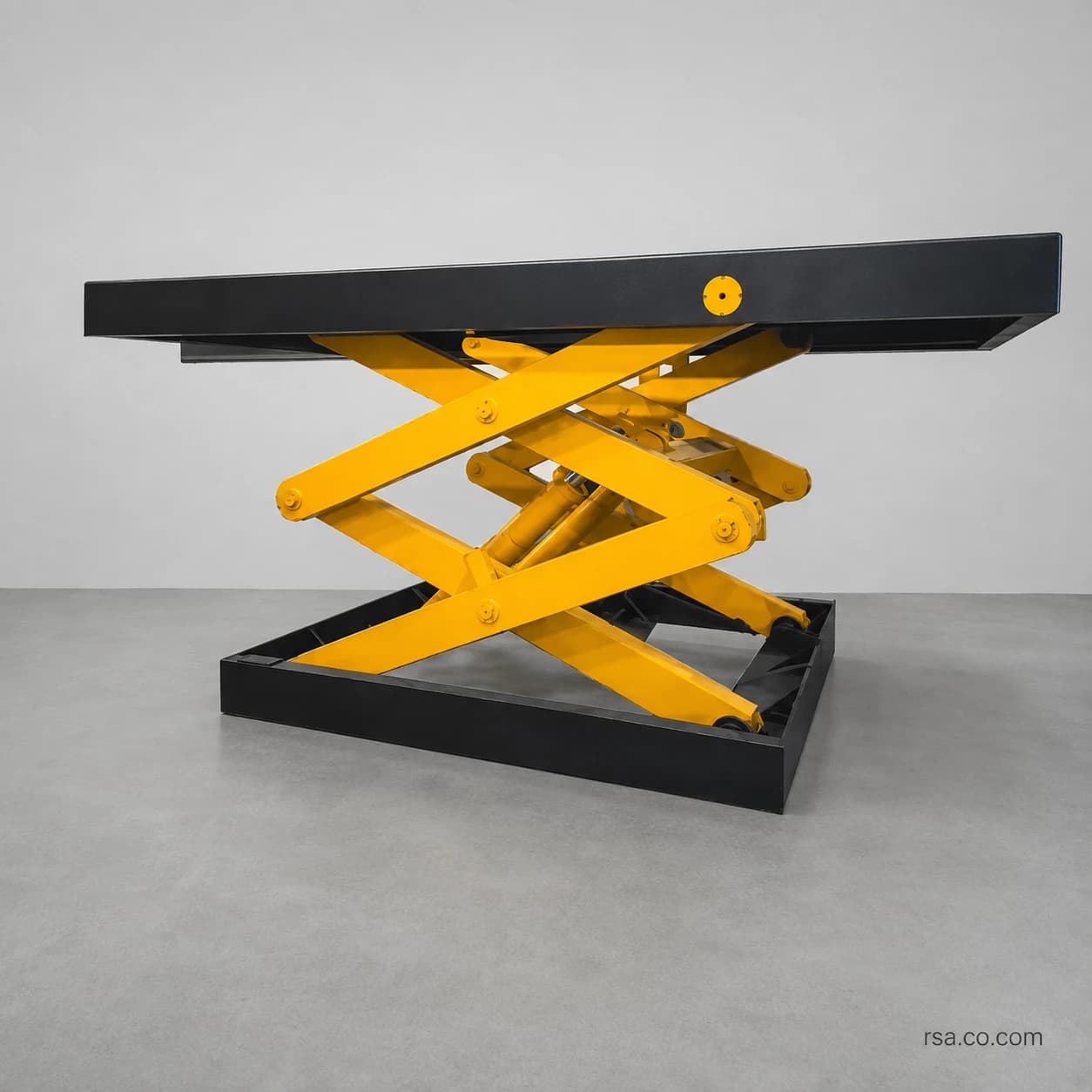
A custom hydraulic scissor lift for controlled vertical movement of goods, equipment, and heavy components in industrial facilities. Platform size, travel height, load capacity, controls, and safety equipment are specified for each application.
Talk to an engineerFull description
A hydraulic scissor lift is a practical solution for moving goods, equipment, and heavy components vertically between different levels. Also known as a scissor lift table or hydraulic scissor platform, it is used in factories, warehouses, production lines, and industrial facilities because it can be designed around the needs of each project.
Crossed steel arms form a scissor mechanism. When the hydraulic system operates, the arms extend and raise the platform vertically. Properly designed support, guidance, and controls help keep the load stable while it moves between working heights or floors.
What Is a Hydraulic Scissor Lift?
A hydraulic scissor lift is a vertical lifting system that moves a platform along a defined path between two or more levels. Hydraulic force drives the scissor linkage to raise or lower the load. It is especially useful where manual handling, forklifts, or other ordinary transport equipment are impractical, unsafe, or uneconomical. Platform dimensions, lift height, rated load, controls, and safety devices can be tailored to the installation.
Applications
Industrial and commercial applications may include:
- Moving raw materials between factory levels.
- Handling heavy parts along production lines.
- Transferring pallets and products in warehouses.
- Loading and unloading goods at industrial docks.
- Connecting different levels of a production hall.
- Supporting workshop and assembly operations.
- Adjusting a loading platform to a truck or unloading area.
- Moving machinery and equipment between levels.
- Providing a height-adjustable worktable.
The intended use determines the structure, platform size, travel height, speed, and control and safety equipment.
How the Hydraulic System Works
A hydraulic power unit supplies the force needed for movement. Pressurized hydraulic oil enters the cylinder, extending the scissor arms and raising the platform. For descent, oil returns through a controlled circuit so the platform lowers at an appropriate speed without sudden movement. Correct hydraulic-circuit design is important for smooth travel, load stability, and safe operation.
The lift may have a single scissor stage or multiple stages according to the required travel height. As travel height increases, arm arrangement and structural design become more important.
Benefits of a Scissor Lift
Controlled load movement
Moving heavy loads between levels by improvised methods can create hazards. A purpose-built lift provides a defined, controlled travel path.
Rigid, stable structure
The scissor linkage distributes forces through the structure. With appropriate engineering and construction, it can support stable raising, stopping, and lowering.
Project-specific construction
Platform dimensions, travel height, load capacity, installation location, and control method can be selected for the actual task.
Less manual handling
A lift reduces the need to carry goods by hand and the physical strain on staff. It may also improve handling speed.
Efficient use of space
Direct vertical movement can make upper levels of factories and warehouses more useful without long transport routes.
Main Components
- Base frame and structural supports.
- Scissor arms and pivots.
- Load platform.
- One or more hydraulic cylinders.
- Hydraulic power unit.
- Electrical cabinet and control system.
- Sensors and travel limit devices.
- Control and safety valves.
- Guidance and stabilization components.
- Emergency stop devices.
The design and build quality of each component affect performance, safety, and service life.
Custom Design Options
Before specifying a lift, review load type, weight and dimensions, travel height, number of stops, available space, and daily duty. Configurable details include:
- Platform length and width.
- Collapsed and extended heights.
- Rated load capacity.
- Number of scissor stages.
- Travel speed.
- Electrical supply.
- Location of the hydraulic power unit.
- Manual or automatic controls.
- Number of stopping levels.
- Guardrails, gates, and other safety guards.
- Structural coating and finish.
- Floor-mounted or pit-mounted installation.
These choices allow the machine to match the production process and installation site.
Key Selection Considerations
Load type and dimensions
Weight alone does not determine lift size. Consider the load shape, center of gravity, dimensions, and how it sits on the platform.
Required height
The distance between the lowest and highest levels determines the scissor arrangement and number of stages.
Installation dimensions
Measure the available length, width, and depth accurately. In some installations, a pit allows the platform to align with floor level in its lowered position.
Environment
Humidity, dust, temperature, indoor or outdoor use, and corrosive substances influence component selection and protective finishes.
Safety equipment
Select safety provisions for the actual use and risk assessment. Items to consider include emergency stops, safety valves, travel limits, perimeter guarding, and measures against uncontrolled descent.
Scissor Lifts and Other Lifting Systems
The distinguishing feature is the scissor linkage supporting the platform during relatively direct vertical travel. Scissor lifts are commonly used for goods, industrial parts, and equipment. A lift designed for goods must not be used to carry people unless it has been specifically engineered, assessed, and approved for that purpose under the applicable requirements.
Pricing
The price depends on platform size, travel height, rated load, number of scissor stages, hydraulic power unit, safety equipment, controls, and installation method. Site details and technical requirements must be reviewed before an accurate technical and commercial proposal can be prepared.
Ordering a Custom Hydraulic Scissor Lift
For a quotation, provide the approximate load weight and dimensions, required travel height, installation space, intended use, and operating conditions. This information helps determine the structure, hydraulic system, and suitable controls. A properly engineered lift can provide a durable solution for moving goods and equipment between levels in factories, warehouses, and industrial production facilities.
Comments (0)
No comments yet.
Leave a comment
Comments and replies appear after moderator review.