
Industrial equipment
Column and Boom Welding Manipulator
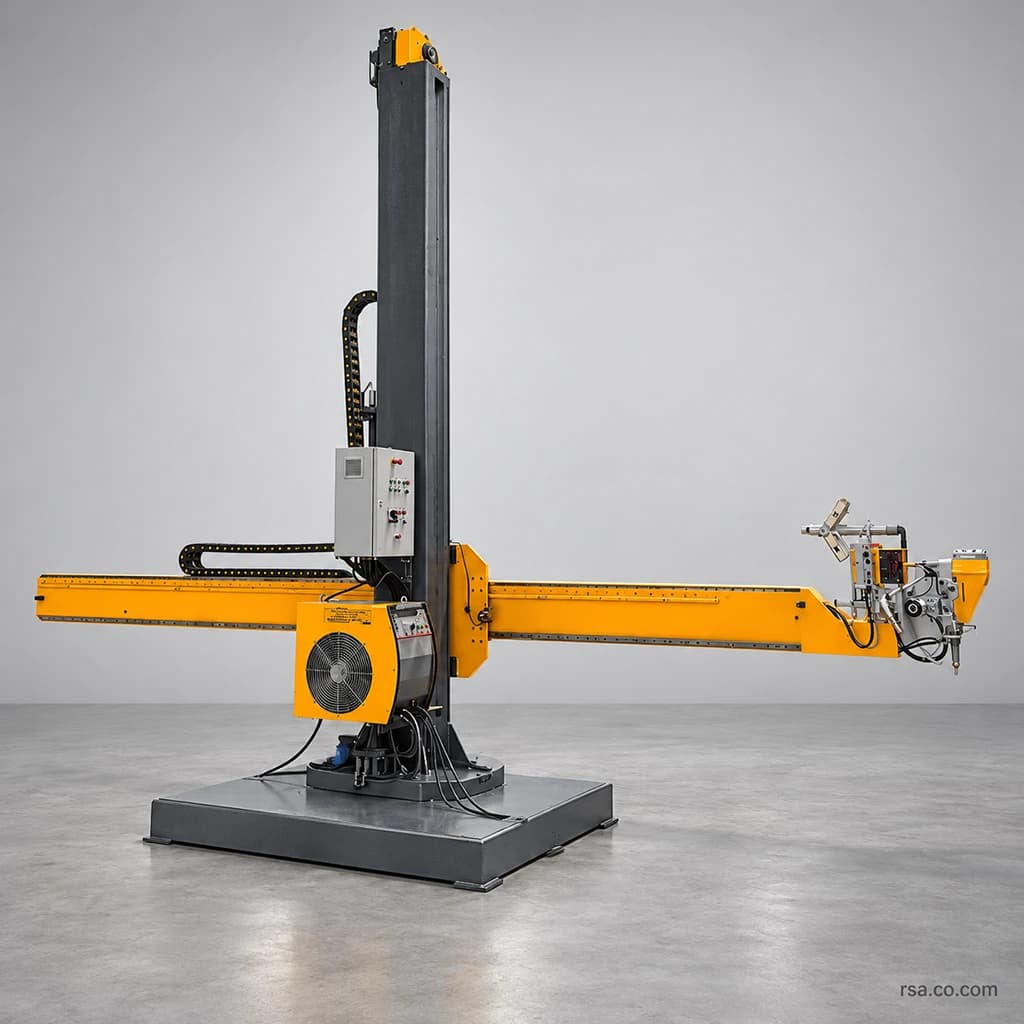
A column and boom welding manipulator positions and moves the welding torch precisely for large workpieces, tanks and steel structures. Controlled reach and travel improve weld consistency and reduce manual handling.
Talk to an engineerFull description
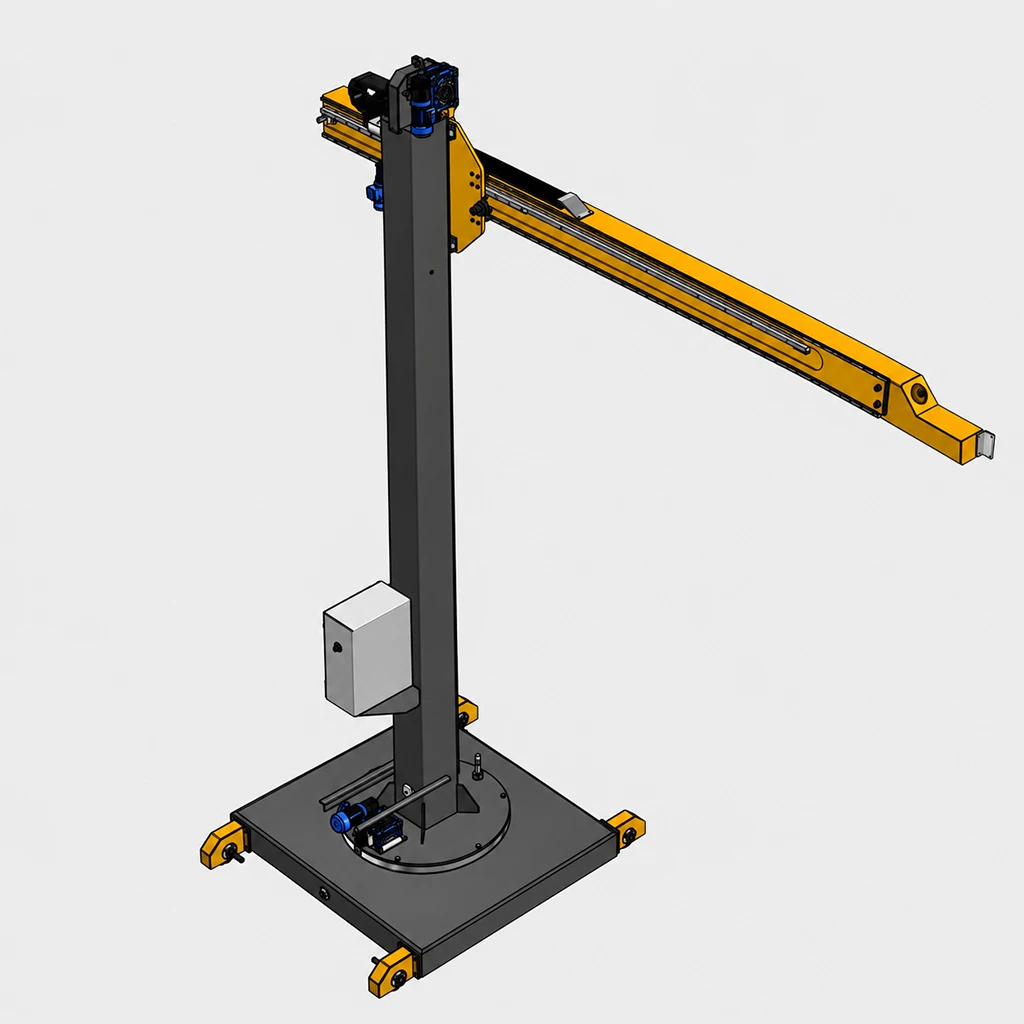
A column and boom welding manipulator holds, positions and moves a welding head in a controlled way alongside large workpieces. It consists of a vertical column and a horizontal boom that gives the head access to the joint. It is particularly useful in tank, pipe and heavy-equipment fabrication when maintaining torch position and uniform travel along a seam would otherwise be difficult.
When selecting a column and boom system, boom height and length are only a starting point. Actual reach, the weight of mounted equipment, welding process, shop dimensions and coordination with a welding rotator must all be assessed together. Selection starts with the workpiece drawings and production conditions: two machines with similar nominal dimensions can differ substantially in load capacity, motion quality and supplied equipment.
Key Features
360-degree column rotation with manual adjustment and locking
Continuous control of the welding head through the machine remote control
Linear welding from inside or outside a tank
Adjustable boom travel speed
Column lifting mechanism with anti-fall protection
Technical specifications | Value |
|---|---|
Boom speed (horizontal) cm/min | 10 ~ 70 |
Boom speed (vertical) cm/min | 150 |
Column rotation speed | 360°/3 min |
Rail car speed cm/min | 200 |
Dimensions
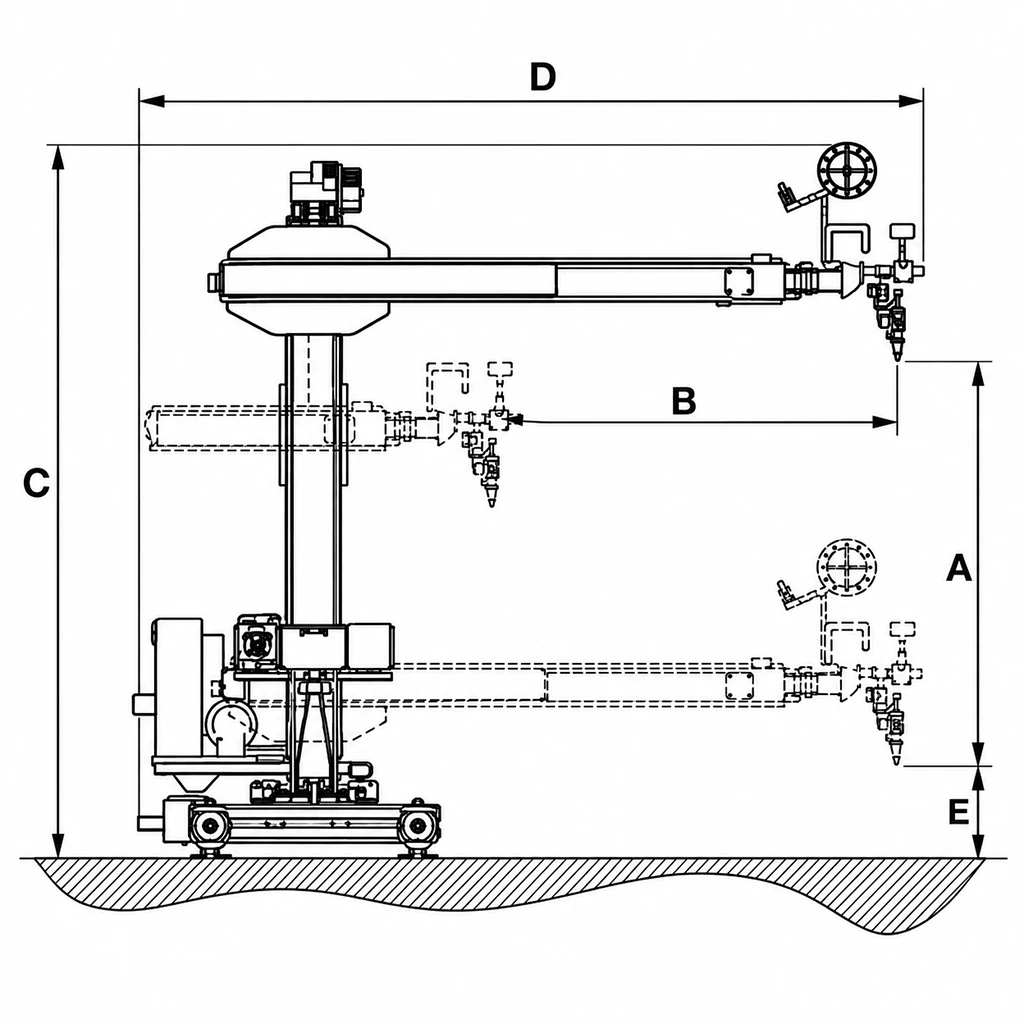
MODEL | A (mm) | B (mm) | C (mm) | D (mm) | E (mm) |
|---|---|---|---|---|---|
RCM2020 | 2050 | 2050 | 3500 | 3500 | 800 |
RCM3030 | 3050 | 3050 | 5000 | 5000 | 1000 |
RCM5050 | 5050 | 5050 | 7000 | 1000 | 1000 |
RCM7070 | 6050 | 6050 | 9000 | 1000 | 1000 |
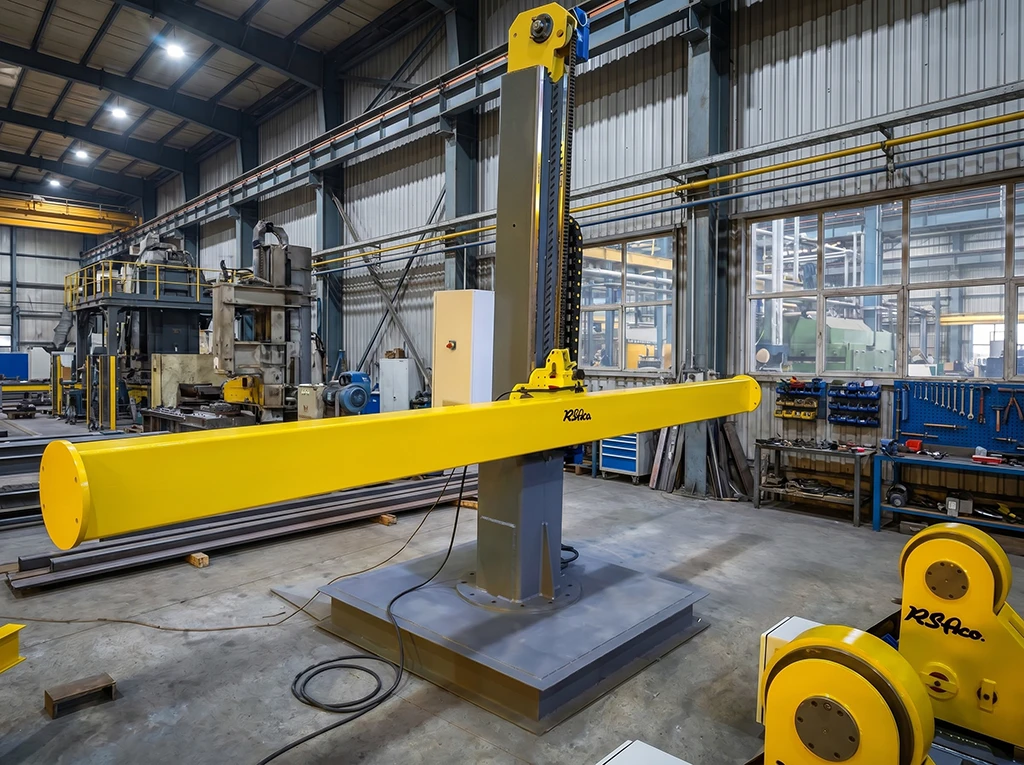
A column and boom welding manipulator is an automated welding system used for large, heavy workpieces when the joint is difficult for a welder to reach or the welding volume is high.
How Does a Column and Boom Manipulator Work?
The column moves the boom carriage vertically, while the boom moves the welding head horizontally. Depending on the machine design, column rotation and rail-mounted carriage travel may provide additional positioning. After initial setup, the required welding motion is produced by the boom, the workpiece or another suitable axis. The drive and control method of each axis should be checked against the specifications of the chosen model.
For a longitudinal tank seam, the head can travel along the joint. In a common submerged arc welding arrangement for a circumferential seam, the head stays at the welding position while the workpiece rotates underneath it. This distinction matters when selecting the motion system: boom travel speed relates to longitudinal welding, whereas the rotator provides circumferential workpiece motion. Column rotation speed should therefore not be confused with the welding speed around a tank.
Main Components and Their Roles
The column, boom and base must support the welding assembly with adequate stability. Guide rails, the lifting system and horizontal drive determine the path and quality of motion. The welding head, and an adjustment slide where needed, are mounted at the boom end. Structural design, guide quality and motion transmission all affect head stability, so motor power alone does not describe machine performance.
The power source, wire feeder, cables, controller and consumables are another part of the system. A submerged arc setup also requires flux delivery. When requesting a quotation, establish whether the offer covers only the structure and motion axes or a complete welding-ready package; suppliers differ in what they include.
Submerged Arc Column and Boom Welding
Submerged arc welding, or SAW, is one process that can be used with this equipment. An arc forms between a continuously fed consumable wire and the workpiece, while a layer of flux covers the weld area. The flux helps protect the molten weld pool, and conventional SAW does not require an external shielding gas. The covered arc is another characteristic of this process.
A submerged arc head paired with a suitable motion system can be considered for long, repetitive seams. However, the flux and fluid weld pool limit welding positions. Butt joints are normally welded in the flat position, so vertical boom travel does not mean submerged arc welding can be performed in every orientation.
Wire and flux should be selected as a technical combination. Flux properties can affect weld-metal composition and performance; choosing a larger power source alone does not ensure the required quality. Base material, target mechanical properties and the welding procedure provide the basis for consumable selection.
A flux recovery system may be part of the package. It collects unused flux for reuse when conditions allow. Recovery differs from continuous flux feeding: one gathers excess flux, while the other delivers it to the head. Specify whether either or both are needed and check the supplied items when ordering.
Using Other Welding Processes
Column and boom manipulators are not limited to submerged arc welding. Suitable configurations can carry MIG/MAG or GMAW equipment, TIG or GTAW equipment, and some cladding systems. Compatibility depends on the head, power source, feeding equipment and motion controls. A claim of multi-process capability should therefore be backed by an equipment list and the requirements of each configuration.
For example, changing from SAW to TIG involves more than replacing the torch. Head mounting, process control and suitable accessories also need review. If a workshop produces several types of products, mentioning this when ordering allows process-change capability to be considered from the start.
Tank, Pipe and Heavy-Structure Welding Applications
Applications include welding inside and outside tanks, making longitudinal and circumferential joints on large pipes, and fabricating sections of wind-turbine towers. Long weld paths and difficult access can justify a mechanized head support and travel system. The machine configuration must match the actual workpiece geometry.
In tank fabrication, reaching an internal seam is a separate issue from reaching the exterior. Boom insertion length, boom cross-section and the space occupied by the head must fit the opening and interior. Enough height for external welding does not, by itself, prove that the same machine can reach every internal joint. Reviewing assembly drawings reveals this difference before purchase.
How It Differs from a Rotator or Positioner
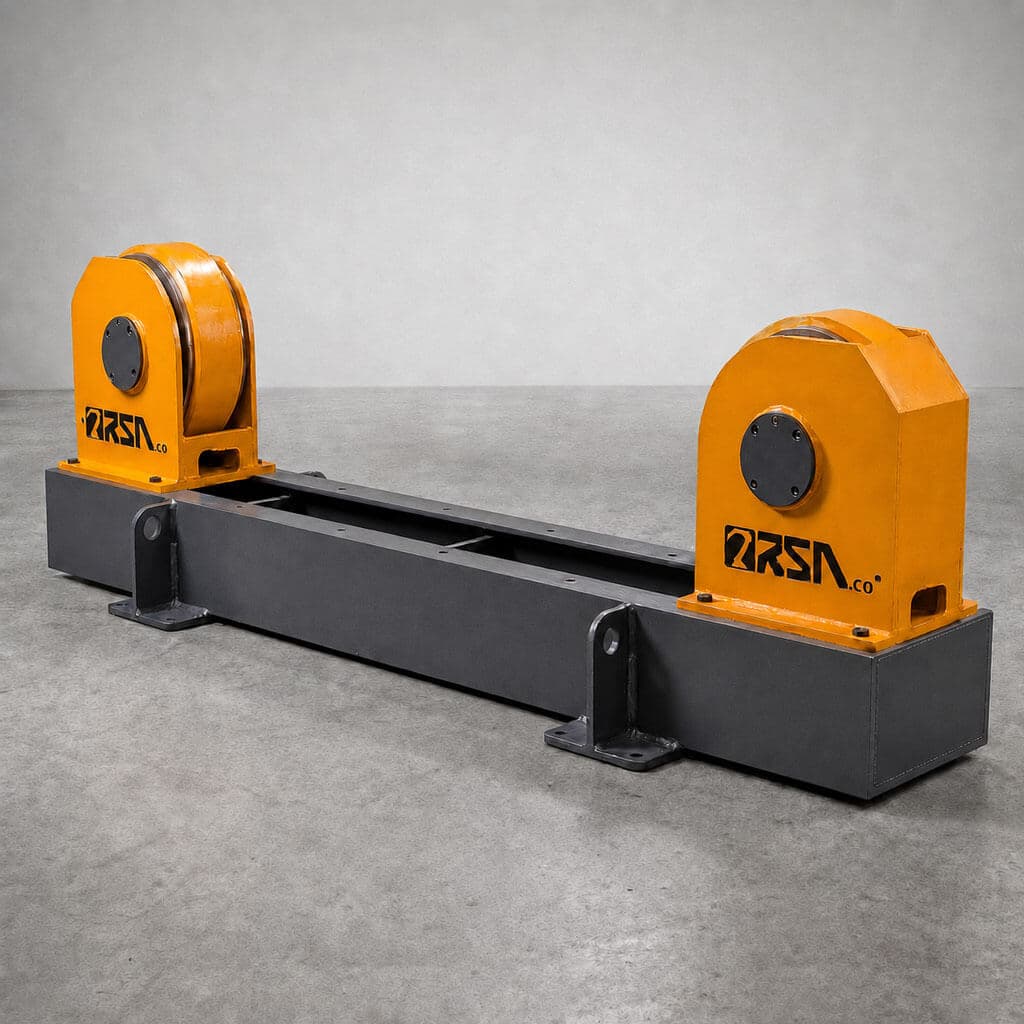
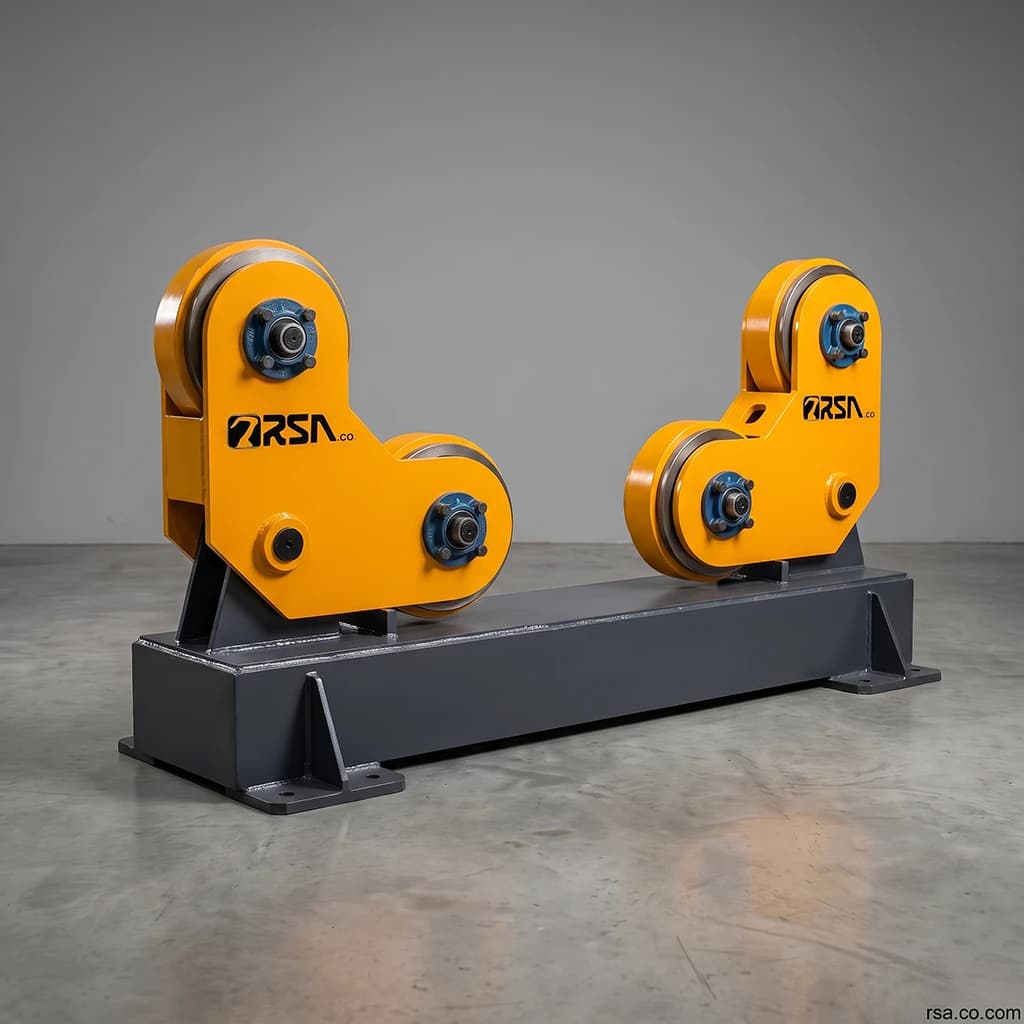
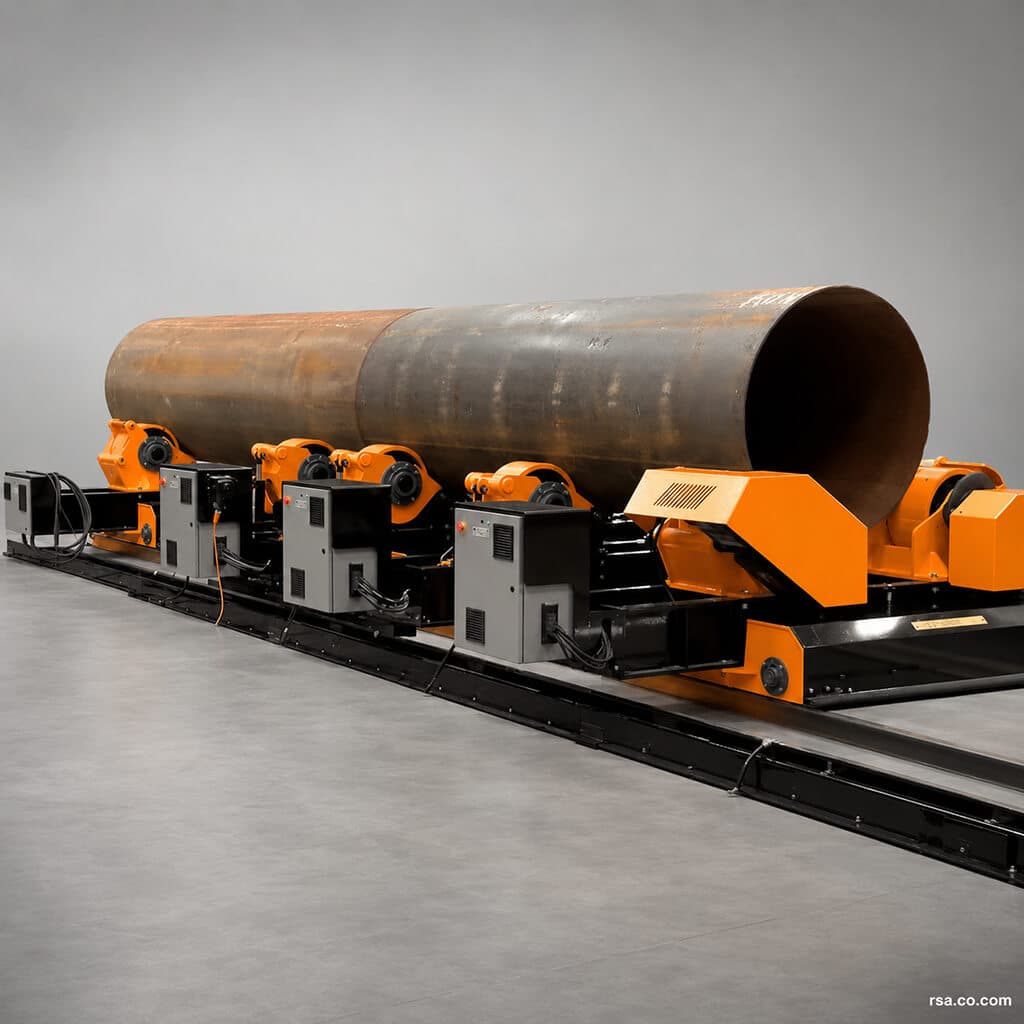
The column and boom supports and positions the welding equipment. A welding rotator supports and turns a cylindrical workpiece on rollers, while a welding positioner changes the orientation or rotation of the workpiece. These are complementary roles, and the machines may work together in one station. Choose each item according to the task it performs in production.
This distinction also determines the required capacities. Tank weight is an input for selecting workpiece support equipment, while the boom load rating concerns the equipment mounted on the boom. Specify both capacities separately when building a tank-welding station so the rotator rating is not confused with the manipulator rating.
Fixed and Traveling Column and Boom Types
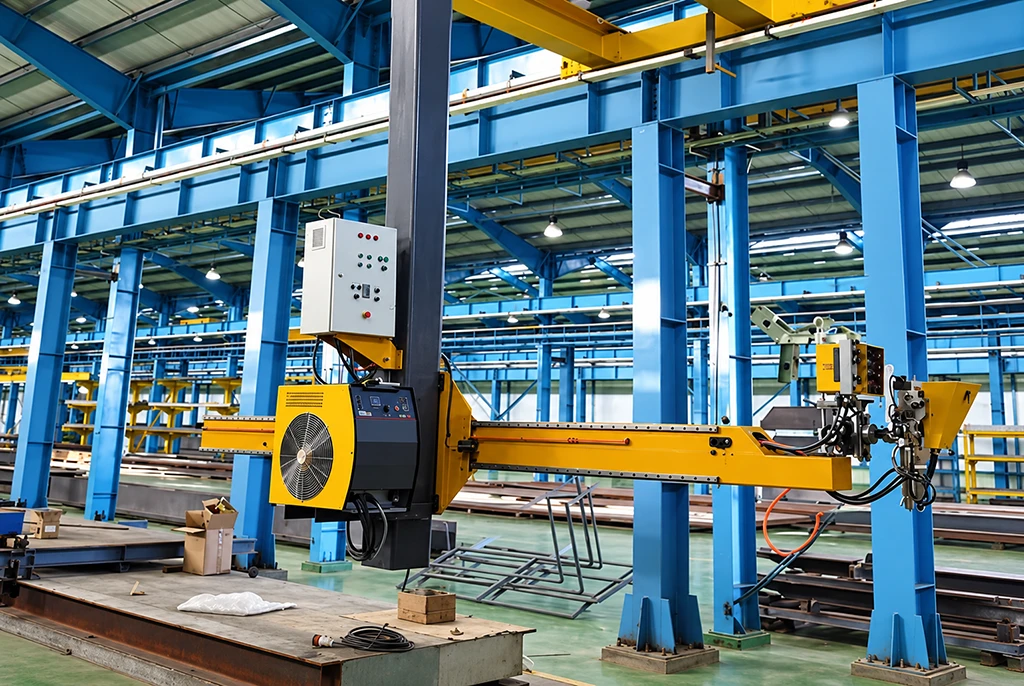
On a fixed-base machine, the column remains in one position on the shop floor; some models also allow column rotation. A rail-mounted traveling model moves on a carriage to reach different positions along the track. The choice should fit workpiece locations, loading routes and available traffic space in the workshop.
Telescopic designs are also available for particular space constraints, with one boom section retracting inside another. Some systems are specially designed for heavier loads or operator access. These are not standard features of every machine and must be specified for the selected model.
Manual versus powered rotation is a separate choice from fixed versus rail-mounted installation. Likewise, powering one axis does not imply fully automated welding. A technical proposal should state how each axis operates, how its speed is adjusted and how it coordinates with the welding equipment.
Selecting Dimensions and Usable Travel
Horizontal and vertical travel describe the usable movement of the machine axes; overall dimensions describe the space occupied by the structure. These must be shown separately on the layout drawing. Manufacturers commonly state boom travel, column travel and boom-end capacity independently. Use these defined parameters when comparing models.
For a project, identify the most distant joint, the lowest and highest head positions, the height of the workpiece on its rotator and the clearance behind the column. Ceiling height, crane travel and workpiece handling space also matter. Names such as “three by three” or “five by five” do not establish adequate reach without a dimension drawing and the manufacturer’s definitions.
For a tank approximately 2,400 mm in diameter, the diameter alone is not enough to select machine height. Tank centerline height above the floor, head clearance and access to the interior must also be considered. This is an example of layout assessment, not a recommendation of one model for every tank.
Boom Load Capacity, Deflection and Motion Quality
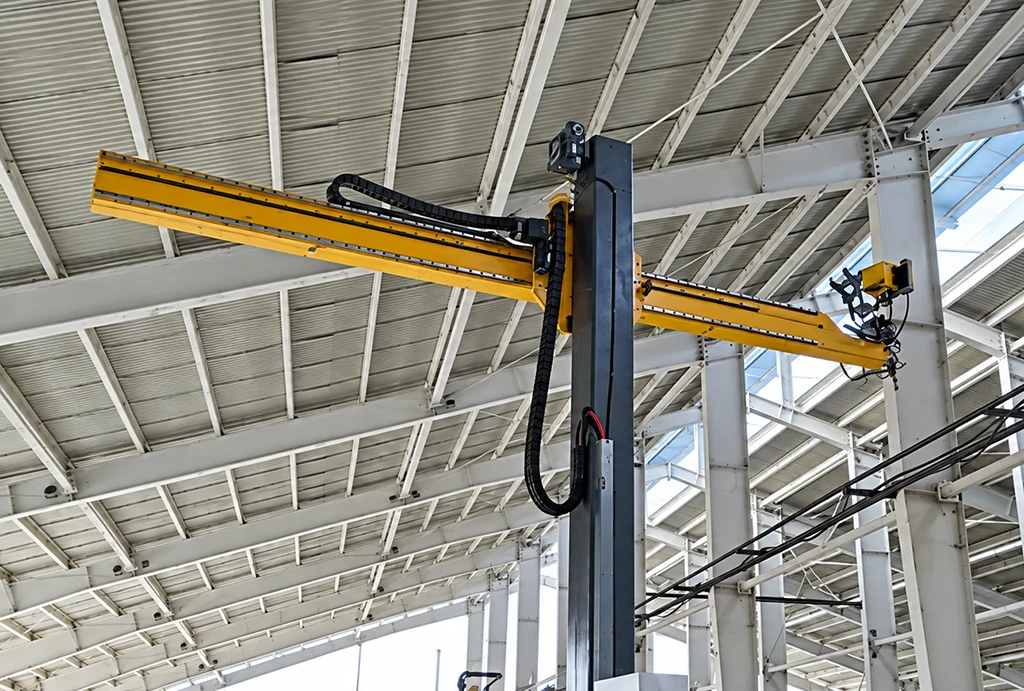
Mounted load can include the welding head, wire feeder, slide, feed equipment and fittings. Load position matters too, so the manufacturer should state allowable capacity for a defined configuration. Published boom-end capacities can vary with machine length and series. Adding equipment weights without checking mounting positions and operating conditions is insufficient for final selection.
Structural stiffness and smooth head travel are important evaluation criteria. When comparing offers, ask about the stated deflection, how it was measured and motion behavior across the required speed range. A practical acceptance test is movement under the agreed working load and configuration: an unloaded demonstration does not represent every operating condition.
Motion Control, Seam Tracking and Cameras
Advanced systems can coordinate welding power-source control, boom motion and rotator motion. Some also store settings, log process data and offer seam-tracking options. These features are valuable when they address the actual production process, pass count and degree of workpiece repetition.
Crosswise and vertical adjustment slides can refine head position. Specify their travel, capacity and control method when ordering. In SAW systems, wire-spool location and flux handling should also be selected alongside the machine dimensions, so accessories fit the available head clearance and working space.
A weld-viewing camera and an automatic seam tracker do different jobs. A camera helps an operator observe and adjust the process; automatic path correction requires suitable sensing and control. State whether the aim is better visibility or automatic joint following, then request the required equipment and performance limits in the proposal.
Effects on Weld Quality and Productivity
Mechanized travel can make head positioning more repeatable, but joint quality still depends on the welding procedure. A WPS specifies the variables needed to achieve the required weld quality and properties. The machine must match that procedure; purchasing a manipulator alone does not prove the final joint will meet quality requirements.
To assess productivity, record setup, head adjustment, welding passes, cleaning and workpiece handling times separately. If most downtime is caused by assembly or waiting for a crane, faster boom travel will not necessarily increase total output by the same proportion. Credible savings percentages require comparable conditions and real workshop data.
Positioning travel speed is not the same as travel speed during welding. Ask the manufacturer to demonstrate the adjustable range and motion at the speed required by the process. The goal is to match machine motion to the production procedure, not simply to choose the highest speed printed in a catalogue.
How to Assess a Welding Station Before Ordering
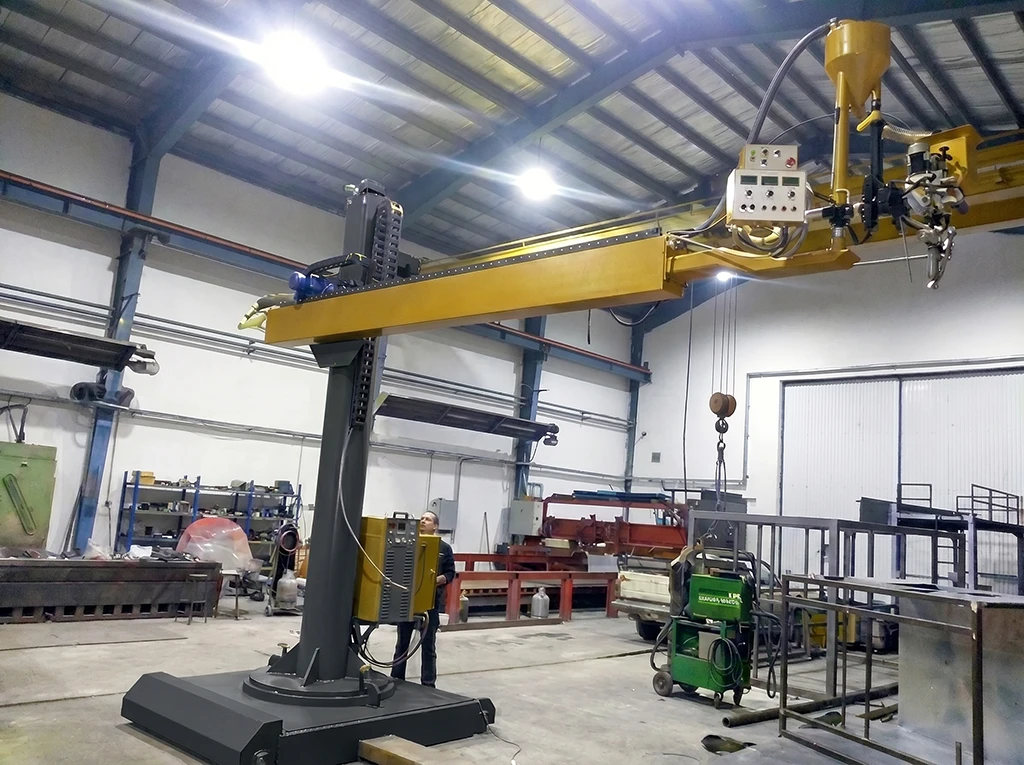
A useful method is to follow one sample workpiece from arrival at the station through completion of welding. Mark on the drawing how it is loaded, its working height and the side from which the head reaches each joint. Then check machine position for the first and last weld locations. This exercise reveals the questions to discuss with the manufacturer.
Next, document the equipment already in the workshop. If you have a rotator, power source or wire feeder, send their specifications with the purchase inquiry. Reuse must be assessed for mechanical fit, controls and process compatibility. Similar appearance or power rating alone does not establish that all station components will work together.
Define acceptance criteria in writing before delivery. These may include head access to agreed points, travel with mounted equipment, control operation and a sample weld relevant to the order. Judge the sample against the project acceptance criteria. These suggestions help clarify a purchase agreement and do not replace approved technical specifications.
Safety and Maintenance
For mechanical safety, review the lifting system and protection against boom fall. Some manufacturers offer dedicated anti-fall mechanisms; their presence must be documented for the particular machine. If an operator platform is needed, it must be designed specifically for that purpose. Equipment load capacity must not be treated as permission for personnel to stand on the boom.
When welding inside a tank, assess gas accumulation and oxygen-deficiency hazards. Shielding gases can collect in confined spaces and cause asphyxiation. Mechanized equipment does not remove this risk; the work plan must address confined-space requirements and adequate ventilation.
Use the manufacturer’s manual as the basis for the maintenance schedule. Before purchase, review access to service points, spare-parts supply and inspection of moving components. Training, documentation handover and periodic service responsibilities should be defined in the contract so maintenance can begin when the machine enters service.
What Determines the Price of a Column and Boom Manipulator?
To compare quotations, first make sure their scopes of supply match. A machine that includes only the structure and motion axes cannot be compared directly with a package that also includes the power source, welding head, controller and flux equipment. Suppliers offer different packages, which can explain some differences in quoted prices.
Consider usable dimensions, load capacity, base arrangement, drive types, level of control and accessories alongside the quoted amount. Then check freight, installation, site preparation and training costs against the pro forma invoice. This makes clear which project needs each offer covers and which items must be supplied separately.
Both new and refurbished machines are available. If considering a used machine, assess mechanical and control condition, capacity documentation and warranty terms separately. Include any modifications needed for compatibility with the production line. A lower purchase price is not enough to establish economic value without knowing the machine’s condition and included equipment.
To request a quotation from RSA, send the workpiece drawings, diameter and length range, weight, plate material and thickness, joint type and proposed welding process. Details of any existing rotator, shop dimensions and target production capacity will also help. If you already have a welding power source, provide its model and specifications so compatibility with the proposed system can be assessed.
Frequently Asked Questions
Can a column and boom weld inside a tank?
Yes, internal welding is possible with a suitable arrangement. However, the opening size, reach length and clearance for the boom and head must be checked on the drawings. Suitability for external welding alone does not prove full access to the inside of the workpiece.
Does the machine need a welding rotator?
For a typical circumferential weld on a cylindrical workpiece, a rotator turns the workpiece. For a longitudinal weld, the head may travel along the joint depending on station design. The need for a rotator therefore depends on the joint and how the workpiece is moved.
Is a welding power source supplied with the machine?
That depends on the order scope. Check the delivery list before purchase and confirm whether the power source, head, wire feeder and accessories are included. The quotation should explicitly define the complete package so final cost and commissioning responsibilities are clear.
Where should I start when choosing a model?
Start with workpiece drawings and a definition of the welding operations. Joint locations, workpiece dimensions, welding process and existing equipment form the basis of a technical proposal. Send your project details through RSA’s quotation request so the model can be discussed against your specific production requirements.
Comments (0)
No comments yet.
Leave a comment
Comments and replies appear after moderator review.